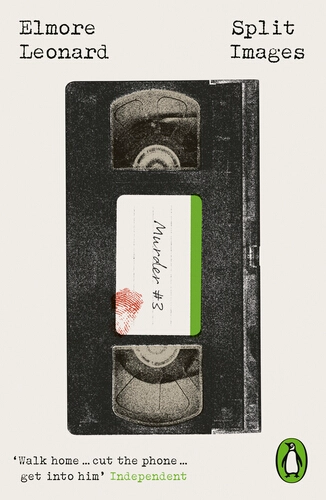
Elmore Leonard: SPLIT IMAGES & LA BRAVA; B. Traven :THE TREASURE OF THE SIERRA MADRE, THE BRIDGE IN THE JUNGLE, THE DEATH SHIP, Penguin
Five books from Penguin by two very different giants of American writing. Elmore Leonard’s influence on modern crime fiction is incalculable. In fact, that sentence can be expanded to say that his impact on modern popular culture has moved his name out of the ghetto of crime writing into wider areas. Quentin Tarantino is a fan, and even before he filmed an Elmore Leonard novel, the filmmaker’s best work (such as Pulp Fiction (1994)) demonstrated the influence of the Master. But while Leonard’s quirkily plotted, ironic tales of criminal lowlifes suffering various reverses of fortune have most of what one might expect in contemporary crime writing, there is one aspect of his books in which he reigns supreme: dialogue. None of his rivals, however prestigious, have Leonard’s gift for rich, idiomatic and often very funny dialogue, and the way his characters speak has been much imitated. Interestingly, his early career as a writer of sharp westerns has now been re-evaluated, even by those of us who knew it only through the excellent Paul Newman movie Hombre (1967; directed by Martin Ritt) – which has elements of Leonard’s later stripped-down crime work. But, ah, those crime novels! Split images, the complex La Brava (1983)… pick up any one of them and you’ll see why ‘Dutch’ Leonard enjoys godlike status among crime aficionados.
More mysterious but equally important is the enigmatic B.Traven. The year 2026 marks a hundred years since the birth of his pseudonym; he is now believed to be Moritz Rathenau, who left Germany after being sentenced for his part in the Bavarian Revolution. His literary legacy in the United States is prodigious, not least for The Treasure of the Sierra Madre which was made into the celebrated John Huston film, but in recent years, Traven’s other works such as the remarkable Death Ship and The Bridge in the Jungle have acquired considerable reputations. His use of dialogue for a non-American is remarkably accomplished, and the suspense and excitement generated by his books is immediately apparent. There is also an element of social critique in his work notably of bureaucracy, and his heroes are damaged but fascinating men. All of his work demands to be read, as with Leonard.