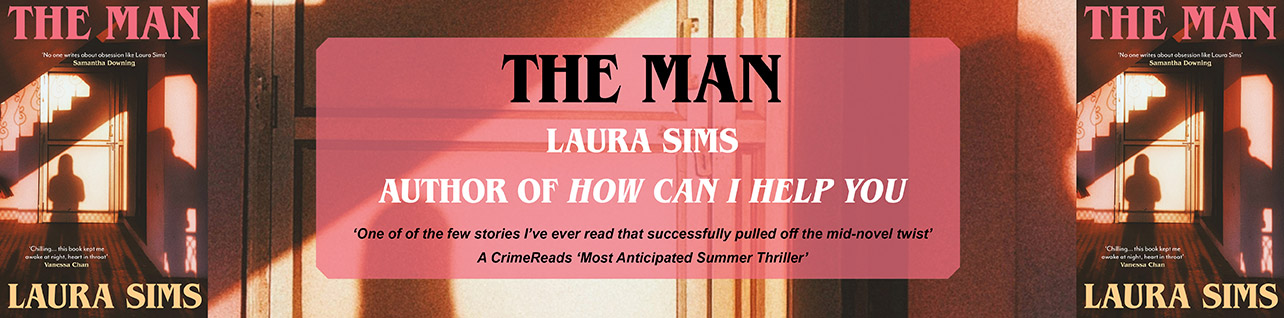
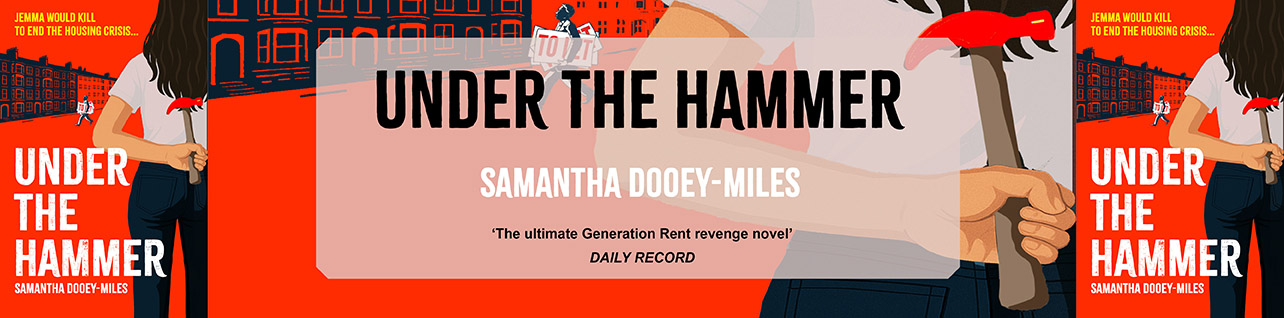
Musician James Yorkston is a folk singer/songwriter from Fife with over 20 years in the music business. His first album was released in 2002 and he has since recorded several more, all highly acclaimed. James has been a punk, an integral part of the Fence Collective and the Yorkston/Thorne/Khan trio. He has performed with folk-rock legend John Martyn and been involved in musical collaborations. It’s Lovely to be Here – The Touring Diary of a Scottish Gent came out in 2011, a first novel, 3 Craws, followed five years later. His first for Oldcastle, The Book of Gaels in 2022, was likened to Shuggie McBain. I asked James about his new novel Tommy the Bruce, a dark, noirish novel in the best tradition of gritty Scottish crime fiction.
Paul Burke: 20 years as a professional musician is no mean feat and from the start you toured/played with some of the best, including Bert Jansch. You’ve performed solo and in a band. In recent years you’ve added novelist to being a songwriter. Do you see yourself as a storyteller? Does it all come from a fundamental creative urge?
James Yorkston: Honestly, I try not to see myself as anything. I think any kind of bracket one may put oneself in – even if it is as open as a “storyteller” may somehow change the way I write. Perhaps I’d knock back an idea as it was just a fun play on words or whatever… and knocking back unformed ideas isn’t a good idea, as who knows how they’ll grow? Better to get them out and then, if needs be, dismiss them.
P: That sounds like a very healthy approach. I suppose that leaves you open to new opportunities. Your first book was The Touring Diaries of a Scottish Gent. How did that come about and did it contribute to the desire to write a novel?
J: That was interesting. I was asked to write a piece for a magazine, and was told I’d get £1 a word, and I could write up to 10,000 words… So, of course, I wrote 10,000 words. It ended up as 10p a word, but one of the people associated with the publishers suggested I write another half-dozen diaries and publish it as a book, which I did. It’s not really in print at the moment, but I still get fans wanting to discuss it and such. And yes, completing the touring diaries certainly gave me the confidence to attempt my first novel, Three Craws, which led to the second, The Book of the Gaels…
P: Funny how serendipity plays its part. As a musician you often collaborate and perform with others, your recent tour with Nina Persson for instance, does that help keep things fresh and innovative with the writing?
J: At the moment, I have the books and the music as my main creative focus, and bouncing from one to the other certainly helps keeps things fresh. Writing songs for Nina to sing was also very inspirational. She has a beautiful voice, we get on well and I love working with her. The duet shows we do are amongst my favourite musical endeavours.
P: Yes, you can see how comfortable you are performing together. But we’re here to talk about your new novel. Please tell us about the inspiration for Tommy the Bruce and give us an idea of the scenario. I suspect you didn’t set out to write a crime novel so much as tell Tommy’s story but it’s a proper noir and a social commentary.
J: You’re correct, I didn’t set out to write a crime novel, just a story. To be honest, I don’t really know what noir means in this context, and I’m not sure I really want to. I like to just get on with things, you know? Sometimes, structure can help creativity for sure, but right now I’m in a place where I am looking away from it. That all said, what I loved about Tommy was putting this (hopefully) loveable, huggable guy in amongst a pit of vipers. Or, more accurately, releasing a couple of vipers into his rather stagnant life.
P: I think I prefer your description to noir. Poetry and lyrics are a short form, how does the novel allow you to explore Tommy’s story as you would like?
J: Poetry and lyrics can be more about atmosphere and impression. They’re almost more about what we don’t say. There has to be space for the listener’s imagination, to allow the stories to grow. Prose however gives me far more permission to go into things in a deeper level. I mean, I could write a four verse song about Tommy and Fi, but I doubt I’d spend as much detail telling the listener how filthy the hotel was before Fi turned up.
P: Ha, no, that’s true. There’s a fierce gritty realism about a lot of Scottish fiction/crime, Tommy the Bruce slots right in, you’re part of a tradition in writing, maybe you could call it working class, earthy? Though I now know you don’t feel it that way as you’ve explained.
J: No, I don’t feel a part of anything. And I think that’s healthy. All these boxes to jump into can only do harm. Having said that, Grassic Gibbon’s writing has been a huge influence on me and I imagine will continue to be so. I love the rhythm of his language, the flyaway, dreamlike nature of it. You know, I wasn’t really aware I was writing this book in Scots, and in my mind I wasn’t, it’s just ever-day language, spelt phonetically.
P: Tell us a bit about the titular Tommy of the ‘ironic’ title please. I think he’s the kind of character people judge – alcoholic, feckless, a drifter – but you gradually reveal his background, his brother dying young, his mother leaving. I can’t help feeling his descent into a nightmare is a tale that illustrates there but for the grace… (comment)
J: One of things I love about longform writing is the possibilities presented by being able to place a person in a particular situation. We all change dependent on where we are, for sure. I personally feel lucky that I’ve ended up home in semi-rural Fife and not in an inner-city apartment. But I could have, had I made a different decision here and there along the way. So, here we have Tommy, not really where he wants to be, but here’s the thing – he has no idea where he wants to be. He’s not a musician or a writer or a nurse or a sportsman, he has no great calling, really, he’s just a bloke. And all of a sudden he’s a bloke in awkward circumstance with a family to defend.
P: Yes, into the picture comes Fiona apparently a bright spot in his life, a positive influence, but things soon spiral and there’s a sense of foreboding as we know trouble is coming. Life is a tough gig, a test of our resilience and ability to survive and times are really hard right now.
J: Yes. And Tommy certainly gravitates towards the light. As a friend wrote in a song “If you were drowning, land would be treasure”. He’s not a macho guy, our Tommy. He puts up with a lot of blows that a more entitled fellow may react against.
P: There’s family history and a troubled past in Tommy’s story, as we’ve seen, but what about cultural heritage, place and myth. What part do they play in his story?
J: Tommy is marooned. By his past, his ignorance of the outside world, his lack of drive, his lack of options. All those aspects you mention have placed him where he is, even if very subtly. He hasn’t any expectations, as he’s never seen any bear fruit. His father certainly didn’t have any. Even Auld Jock, Tommy’s only real pal, is keeping Tommy stuck where he is, as Jock’s presence makes Tommy’s life bearable.
P: With so much going on, what’s next, will you write another novel?
J: Well, I have two albums coming out this year, one an official one with my Swedish friends, and one a slightly more abstract thing where I improvise nyckelharpa, alongside two of my great musician pals. Writing wise, well, my agent has a collection of short stories I wrote that he’s trying to place somewhere, and I do indeed have the bare bones of a novel sketched out in my head… But, right now, after this, I’m off down to my studio to demo the next batch of songs. We’ll see what happens.
P: It’ll be great to see/hear what you come up with, thanks James.
J: Thanks.
Tommy the Bruce is published by Oldcastle Books