If summer days are made for reading, there is an abundance of worthwhile titles this month, with a smattering of serial killers, albeit not all of a bloodthirsty nature, exotic noir set in Mexico, a splashy return to form and bad habits for James Ellroy, an intriguing thriller about running (both metaphorically and sports-related), the horror of Warsaw in WW2 and much more. The choice is yours.
BOOK OF THE MONTH
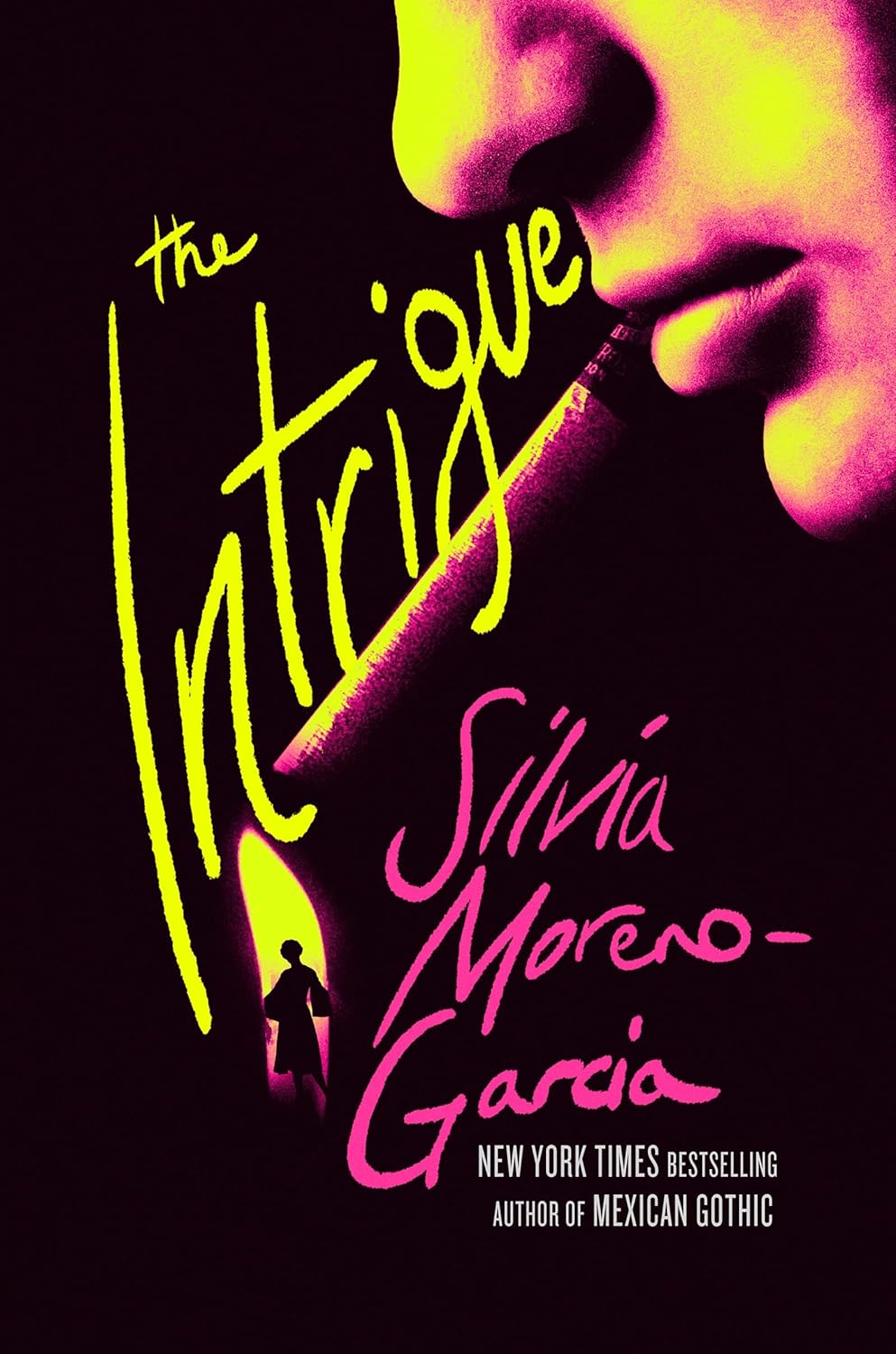
Silvia Moreno-Garcia/THE INTRIGUE (Arcadia)
Oscillating between thrillers and silky horror novels, Canadian-based Mexican author Moreno-Garcia seldom puts a foot wrong as she effortlessly straddles genres with aplomb. Yet again, the plot unfolds in her native country and is heavy on nostalgia but also keenly evocative in its sense of place as it, in this instance, steers away from the supernatural, although the luscious prose and descriptions ride a tightrope, and you’d not be surprised if the uncanny stepped out on the next page as her story envelops you in a febrile blanket of expectation. Like a more modern incarnation of James M. Cain at his best, THE INTRIGUE, set in the 1940s, sees Ulises a con man and gigolo with fading looks and even less money travel to the Vera Cruz region in an attempt to seduce and defraud a wealthy local spinster he has connected with by correspondence stemming from a magazine’s lonely hearts column. Once installed in her house, he has to contend with her downtrodden but canny niece who soon realises he is on the make and proposes they work together to steal from her aunt, whom she despises. But can either trust each other? A once beautiful house now fraying at the edges, poisonous female rivalry, the social mores of provincial society and a slow burning game of seduction, with two women who are not necessarily what they initially seem and something of a hapless villain with more looks than brain and the scene is set for a searing battle of wills. Old-fashioned noir at its best. I loved it!
HIGHLY RECOMMENDED
Douglas Jackson/BLOOD ENEMY (Canelo)
The 4th and final volume of Douglas Jackson’s Warsaw Quartet brings this outstanding series to an end, retaining its supremely bleak atmosphere and how could it not, seeing that it’s all based on real, historical life, and is set against the background of the tragic ghetto uprising. My only, minor reservation is the fact that, as I’ve indicated in a previous review, the 3rd volume which mostly moved to Scotland, neglecting the central bleak focus of the Polish capital, slowed the pace and the saga might have possibly worked better as a trilogy. Jan Kalisz, the torn hero, a Kripo policeman who though he ostensibly works with the Germans is also allied to the clandestine resistance, now reaches the end of the road as the city is under siege by the Russians and peril lurks on every corner, whether from the Nazis, the ordinary Poles who believe he is a traitor, the warring factions fighting the Germans against the odds, the black marketeers or, worse, the SS and Gestapo opponents who’ve long suspected his activities as a double agent and are finally out for retribution. In addition, his wife, a nurse, and his impetuous but patriotic son, are also in play and in equal peril. The pace of the novel is slow and oppressive as Jan navigates through the ruins of the city with death, whether just accidental or at the hands of his foes, on every corner. There is a terrible poignancy as the historical reality unfolds, unable to be changed even all these decades later, and a set of characters we have learned to know intimately and root for must face the inevitable verdict. It’s no spoiler to reveal that not all will survive, including a harrowing section in which Kalisz infiltrates Auschwitz in search of answers and finds himself trapped in the camp. A major achievement.
Scarlett Thomas/THE RUNNER (Scribner)
A challenging and invigorating read from a British author who has long been on the literary margins of the genre, this is a truly innovative thriller defying convention and likely to divide, but which gets top marks for daring to be different. Jay (not his real name) has been on the run since in his teens, when out of fear or a more deeply buried psychological motivation, he fled the scene of a murder he witnessed and didn’t come forward, compounding the ill by stealing a vital piece of evidence. Still carrying the burden of his guilt, we find him years later in Cyprus, living off the grid, ingeniously surviving cashless through the use of airmiles rewards and loyalty points from day to day, always hours ahead of a reckoning and seemingly pursued from country to country by would be assassins for reasons he cannot fathom. Having temporarily taken refuge in an all-inclusive holiday resort, which is wittily described with a pithy insight into its traditional denizens, he comes across the ambiguous if beautiful Ellie and undertakes to race in a local cross country half marathon to hoover up some much-needed cash, only to find himself both betrayed and tracked down by one of his mysterious pursuers. On the run again, he finds himself joining a group of freelance exorcists and a defrocked priest seeking to breach the security of an oligarch’s island retreat which proves just the beginning of a series of picaresque catastrophes on a literal highway to hell which Jay is unable to control, what with Ellie reappearing and now possibly foe rather than a holiday romance. Add the morass of the bitcoin business, a mass of Biblical allusions and a plot that explodes in all directions and Jay’s travails and competitive running make for a delightful if worrisome romp. Not your usual thriller by a marathon mile.
Ajay Chowdhury/EDEN FALLS (Harvill)
Chowdhury’s first stand-alone thriller zips ahead through hoops and plot twists like a runaway train, an impressive follow-up to his Kamil Rahman more procedural series which featured a Kolkata cop in exile in the UK, where he works in restaurants as waiter and cook before finally joining the Met. Adam and Aysha have just wed but their honeymoon is brutally interrupted when Adam’s best friend is murdered and Adam disappears at Delhi airport, holding Aysha’s passport, leaving just a puzzling message of apology. Left on her own, Aysha is then under suspicion from Indian intelligence authorities and the FBI for reasons she cannot fathom, and finds help in the unlikely person of Sara, a past lover of Adam’s. The two women form an unlikely and tense alliance with shades of Thelma and Louise as they dive heads first into a devious plot that takes the story into the shadowy realms of science fiction, artificial intelligence (an area in which Chowdhury in civilian life has long been associated with) and follows the women as they pursue the truth along the highways of America, uncovering mischief and conspiracy at every turn of the wheel. All breathless stuff about the most topical of subjects allied to a deft and incisive storytelling rhythm, and a rollicking adventure to relish.
Erin Kelly/THE NIGHT STAIRS (Harvill)
Set in St Cordula, a Yorkshire-based Catholic girls’ convent boarding school, Erin Kelly’s latest chunky thriller blends familiar elements with echoes of Donna Tartt with an oppressive gothic cloak of dread and conflict. Fiona Fox, the Deputy Head of the school is about to preside over a historical merger with another school as the establishment is in financial straits, going against past traditions and superstitions, seemingly triggering a spate of dizziness and fainting spells amongst the girls, drawing a parallel to an earlier period in the dual-time narrative when fatalities ensued from falls down the eponymous stairs. With legends from the past clouding people’s minds and a delicate balance of nascent sexuality holding many of the febrile students in its grip, both Fiona and one of the students search for answers and the actual truth which must surely not be of a supernatural nature. Heavy with foreboding and atmospheric, the novel digs deep into the unhealthy history of the school with Biblical allusions peppered throughout the narrative but also, possibly to its detriment, an unfortunate tendency to focus on the lesbian characters as designated victims which might alarm some readers. Intense, gripping and an absorbing beautifully written read but on the edge of being politically incorrect in some circles.
Charles Cumming/ICARUS 17 (Hemlock)
The 4th volume in the secret Anglo-American intelligence outfit BOX 88 series moves ahead timewise with Lachlan Kite and former girlfriend and operative Martha Raine middle-aged, apart for many years and nursing torrents of regrets. Triggered by the notorious murder of Jamal Kashoggi, the plot then turns into a conspiracy thriller whereby a multitude of agencies, players and countries confusingly attempt to silence a young woman aware of the circumstances of the journalist’s gory demise and with seemingly a price on her head. My first reaction was why as the sorry event notoriously became public! By coincidence, she also happens to be the girlfriend of the son Lockie never knew he had, and when the young couple go on the lam pursued by a welter of bad people, official spies and private enterprise, the couple is reunited in an effort to track them down before the bad guys intervene. In parallel, a murder spree close to Kite’s home in Sweden is foiled, although the motives behind it are never quite elucidated and the whole episode feels like something of an odd man out in the plotting. The chase for the two fugitives moves across the Greek Islands and Europe, always barely a few steps of their foes and, I fear, feels repetitive and overlong. As a result the novel’s focus never quite clicks and although well written and with believable characters, doesn’t engage the reader in full. Hopefully just a hiccup in a series that had hitherto impressed.
David Fennell/ALL KILLERS ABOARD (Orion)
A radical change for Fennell whose gory DI Grace Archer psycho thrillers had previously found me impervious to their blood-soaked excess, ALL KILLERS ABOARD turns out to be just on the right side of cosy with the classic trope of a series of murders occurring on a luxury cruise ship, sailing from Southampton to New York, and with the added bonus of a robust comedic sense. The twist is that the ship is busy with serial killers, who are enjoying their annual gathering in the guise of the Midnight Chorus Society convention. Also a guest on board is a diva-like former Hollywood actress Jacqui DuLac accompanied by ghostwriter turned amateur sleuth Martha Hammond and the ensuing mayhem and jolly old detection is deft, fast-paced and very much tongue in cheek, what with a witty line in quickfire dialogue. It’s all a bit Golden Age capers à la Agatha Christie meets Dexter, with a sitcom vibe but also offers some reflective moments as Martha’s father had been the victim of one of the serial killer passengers, so that even when the tone is light-hearted, the characters feel real and not too cardboardy. Sleuthing in a closed environment is far from new territory but the way Fennell combines all the elements proves deft and elegant, raising a satisfying smile in the process and proving he’s not just a blood and guts crime writer.
James Ellroy/RED SHEET (Hutchinson Heinemann)
Ellroy’s previous novel THE ENCHANTERS was virtuously short and tight, with his recurring compromised cop Freddie Otash treading familiar background amongst the detritus of America’s tainted past. RED SHEET returns to the trough and the character in the 1960s at the time of the Cuban missile crisis but comes bloated, vituperent, excessive, with all the bile Ellroy at both his worst and best can summon and will again divide readers. Robert Kennedy, the Attorney General instigates a deep investigation against communist activities in Los Angeles and Otash is put in charge, albeit also working for Richard Nixon and playing a double game as malfeasance and corruption quickly rise to the surface. Every single character involved, both historical and fictional, is heavily compromised, if not deluded and the plot races along like a car out of control, dragging shattered illusions, relationships and a canvas of broken ideals in its wake, as the dead Otash in 1992 tells the story in Ellroy’s typical staccato, breathless and fevered prose. We’ve seen it all before from the Demon Dog of American literature, including the idealised female as image of redemption – in this instance the folk singer Judy Henske, with Ellroy’s obsessions, sexism, political incorrectness and somewhat rabid anti-communist personal views in abundant display. Both tiresome and fascinating and like a torrent out of control, a novel for the ages, past and present, that will compel, annoy and grip in its bilious fervour and making you feel unclean.
Claire McGowan/THE QUICKENING (Corsair)
Irish author McGowan is both prolific and protean, her books reaching my letter box with a metronomic regularity from a diversity of publishers, spanning genres from traditional and regional crime thrillers, domestic puzzlers, tales of suspense and more, and that’s not even including her various pseudonyms. THE QUICKENING, however, highlights an interesting new facet of her talents as she gets to grips with intense fervour and belief with the dystopian feminist thriller, with a nod to Margaret Atwood or Naomi Alderman. The UK has undergone a massive political realignment which at first presages well but soon turns into something of a nightmare for women, now relegated to second division status as strict fertility laws come into place, with abortion proscribed. In 2040, in a country controlled by the Hope Party, Karen, an older woman who has reluctantly accepted the fact that her career has stalled and her husband’s is considered more important by the State, sees her world collapse when her teenage daughter Charlotte falls pregnant and suffers an ectopic incident, with her life at stake as the law now rules that the pregnancy cannot be interrupted. Assisted by her sister Isobel, a doctor, the trio are forced to go on the run, which allows McGowan to paint a gloomy panorama of a world to come that is far from perfect. The novel doesn’t quite attain the emotional power of some of the classics in whose footsteps it follows, but its evocation of a sadly credible near future stands as a healthy warning shot and the thriller element will keep you turning the pages throughout.
Richard Jerram/THE MAKOTO MURDERS (Titan)
An impressive noir thriller set in Tokyo, Richard Jerram’s first novel won the CWA Debut Dagger a couple of years back on the basis of a detailed outline and its opening chapters and proves a worthy addition to the prestigious list of authors whose career was launched by this particular award, beginning with Louise Penny (who actually didn’t win but came second!). Ken Kato is a British-Japanese paparazzo photographer who enjoyed a brief moment of fame when he took the iconic photo of a young boy who died in the tsunami, but his career has been on the wane ever since. Faced with irrelevancy, he turns to serial killing to generate the ghoulish photos Hikari Magazine is ready to pay a high price for. Having enjoyed a brief affair with Makoto, the wife of a colleague, he now seeks to impress her by only killing people with the same name. Naturally, this alerts the police to his modus operandi but also raises the suspicion of his editor. Told from Ken’s point of view, this proves a portrait of a killer with few qualms about the violence he creates, but also a reflection on his amorality, sometimes akin to Dexter in his belief and determination that he is possibly in the right. Satirical when it comes to the demands of the press’s vox populi but also a fascinating portrait of compulsion, an atmospheric first novel with a difference.