“I have this far-fetched idea.”
“Shoot,” replied the FBI source on the other end of our encrypted line. “Nothing’s far-fetched in my trade.”
My thriller hero Rake Ozenna needed a fresh setting. He is an Alaskan soldier raised on a remote island on the U.S.-Russian border with a penchant for high-octane action in cold, hostile and little known flashpoints.
An American presidential executive order had caught my eye because it named the Yakuza, Japan’s organized crime syndicate, as a threat to national security.
So, if America viewed the Yakuza as a threat, how much could this criminal network undermine Japan itself, the staunchest of American allies?
My source had worked on Asian organized crime for decades.
“Remember it’s fiction,” I ventured. “But this is the scenario: A Japanese crime family controls the government. It can’t accept defeat in the Second World War, wants its islands back from Russia, has no trust in America and is building a nuclear weapon. It sounds crazy but what fraction of that is credible?”
“All of it,” he said impatiently. “I’ve been working twenty years to get this Japan threat onto a serious desk in Washington and no-one’s listening.”
The next day a string of open-source links landed in my mailbox about court cases, loss of nuclear fuel, the Yakuza influence, much of which fed into Ice Islands.
Rake’s next outing is brutally cold and sparsely populated Greenland that Donald Trump has turned into a point of bubbling global friction by saying he’s going to take it, no matter what. Currently, Denmark has it.
In non-fiction, America runs the Pituffik Space Base in the far north tasked with tracking enemy missiles. On Trump’s threat, Denmark stocks up on explosives to blow up runways in case America invades. Trumpian characters, like J. D. Vance, Donald Trump Jnr, and the late MAGA activist Charlie Kirk head for Greenland’s tiny capital Nuuk, to lobby support.
A former bricklayer, Jorgen Boassen, emerges as the charismatic Greenlandic voice for America to move in.
“The Americans have the know-how and knowledge about mining, oil exploration, and security,” he told me while shaking hands and clapping the shoulders of passersby. “Denmark cannot defend us.”
An American company takes control of a massive Greenlandic mining and critical minerals operation. Closed-door negotiations keep hammering out terms for new bases and strengthened U.S. control.
I head to Qaanaaq in Greenland’s far north, an Arctic settlement that’s only seventy miles from America’s Pituffik Space Base. Families were forcibly moved here in the 1950s when the base was built.
These people are as tough as hell.
Surviving in extreme cold and hunting for food are so written into their DNA that NATO militaries are setting up courses to learn from them.
When a Narwhal whale was spotted in nearby waters, they headed out in small boats with kayak canoes, harpoons and rifles to kill it and bring back the meat.
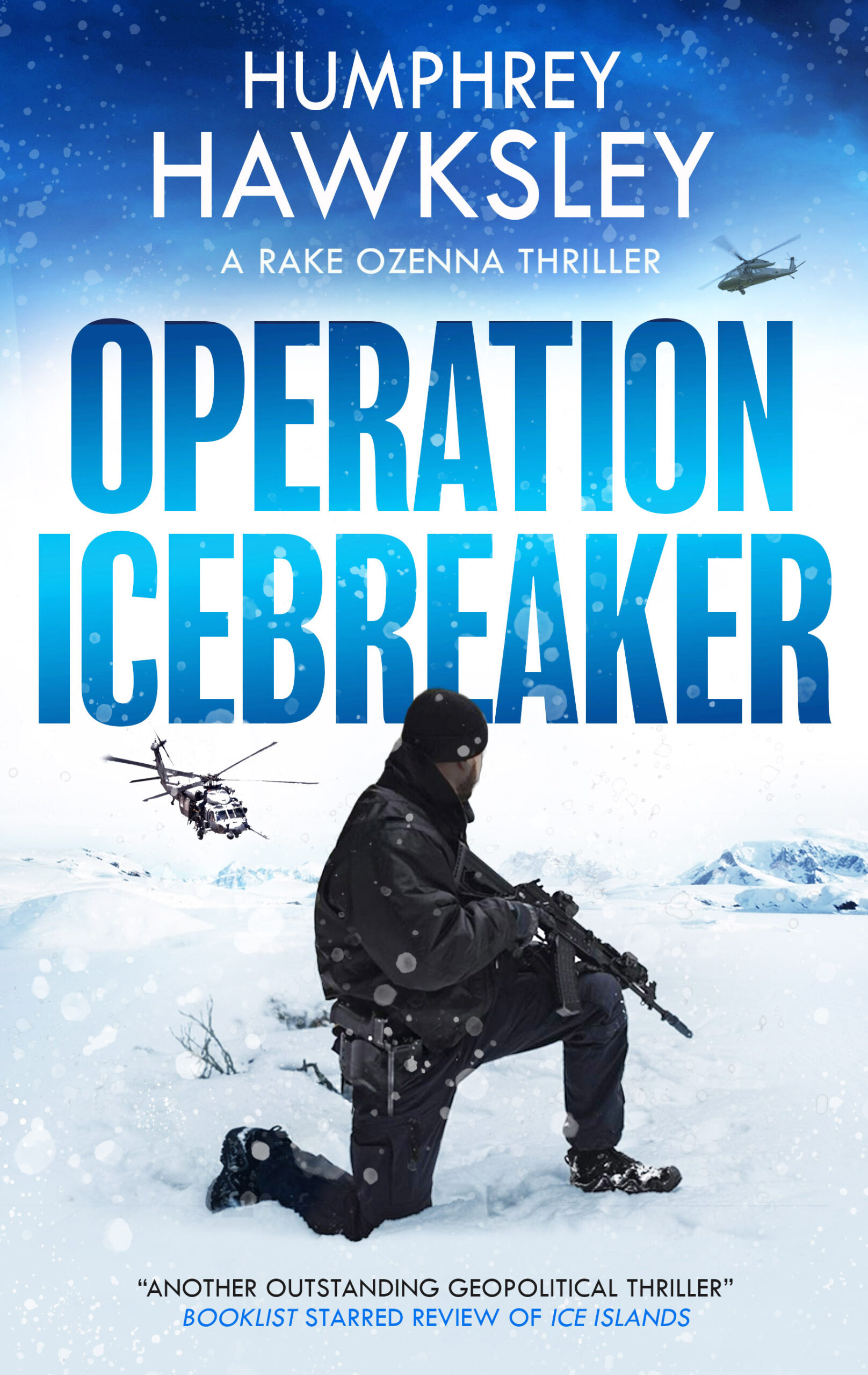
Amid all this comes Rake’s latest adventure, Operation Icebreaker, the gut-punch, edge-of-your-seat thriller on America trying to take Greenland.
For initial research, I had coffee with a NATO contact in quiet London club.
“I have this far-fetched idea,” I began.
And we were there for the next two hours.
Operation Icebreaker by Humphrey Hawksley is published by Severn House