CT asked the author of Road to Perdition for his take on the Dark Knight – prompted by his own work as a Batman scribe
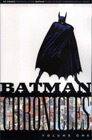
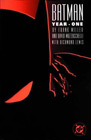
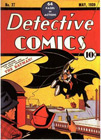
With the Batman film franchise poised to yet again reinvent itself, the expected flurry of comics material, new and old, rushes to the shelves. Two reprint volumes are of particular interest — The Batman Chronicles: Volume One, which collects tens of thousands of dollars worth of rare late 1930s/early 1940s comic books into one modestly priced package; and Batman: Year One, Batman’s beginnings as seen by the character’s most influential contemporary interpreter, Frank Miller. The difference between the two is as striking as a Miller visual (although Miller himself does not draw Batman: Year One – that is left to the brilliant David Mazzucchelli). And Batman Chronicles represents the better bargain – four 1980s comic books can hardly compare in collectability to the original Batman stories as seen in Detective Comics #27 (May 1939) through #38 (April 1940) and the priceless Batman #1 (spring 1940). Yet it’s fair to say that only collectors and pop-culture buffs will prefer the Chronicles over Miller’s dark vision. Anyone under 25, knowing only the film franchise, may be astounded by the crude, juvenile nature of the source material; even a generation or so of fans of DC’s Batman comics and graphic novels may find bewildering the amateurish nature of the Batman’s real beginnings.
Before we turn to the pages of the Chronicles, some Bat backstory is required. When Superman and Batman first appeared under the aegis of DC (Detective Comics), comic books were the bastard stepchild of comic strips. Early comic books were reprints of syndicated strips, daily and Sunday comics tossed between covers, and the success of DC’s original material comics was unexpected. Comic strips, after all, represented a popular, even respected medium – cartoonists like Bud Fisher (Mutt and Jeff), Rube Goldberg of zany invention fame, and Al Capp (Li’l Abner) were media superstars making superstar money. Today, syndicated adventure strips are dinosaurs; but at the dawn of comic books, syndicated adventures strips roamed and ruled the newspaper world – Milton Caniff (Terry and the Pirates), Alex Raymond (Flash Gordon) and Chester Gould (Dick Tracy) were the idols of aspiring young cartoonists who hoped one day to make it big.
The creators of Superman, Jerry Siegel and Joe Shuster, were a couple of teenagers from Cleveland, who would be repaid for coming up with the great icon of ‘truth, justice and the American way’ by getting screwed by their bosses out of their character. Bob Kane, at 22 a little older and wise enough to get a better contract, would see his creation, Batman, bring him fame and money for many decades. Some comics historians credit Bill Finger – 21 when Batman began – as the co-creator of the strip, but his contributions remain murky. Technically, at least, he was merely Kane’s primary writer. Superman was a comic strip concept that every syndicate in the country had turned down – having it appear in a low-end comic book was a last resort, even for a couple of teenagers. But the surprise success of the feature in Action Comics led DC to encourage other creators to come up with costumed heroes. Kane’s response was to develop Batman (probably with considerable help from Finger). The concept itself was a modern-day version of Johnston McCulley’s Zorro with elements of various pulp-magazine heroes thrown in.
Have any of the iconic superstar heroes of American popular culture ever had shabbier beginnings than Batman? Tarzan begins in 1914 in a perfectly respectable adventure novel by Edgar Rice Burroughs, wherein Tarzan, Jane, the Apes and company are wholly recognisable. Sherlock Holmes starts in A Study of Scarlet (1887) with himself, Watson and Conan Doyle already near the top of their form. Mike Hammer remains the same vengeful Mike Hammer he’s always been in Mickey Spillane’s first (now classic) detective novel, I, the Jury (1947), and James Bond is a readily identifiable sadistic womanizer in a tux in the novel Casino Royale (1953). Batman, as the Chronicles demonstrate, was something else again; even Superman was better written and drawn in his beginnings. Like Superman, Batman was written by kids for kids. The first story (Detective Comics #27) is crudely drawn, almost childish in Kane’s strained combination of Chester Gould and Milton Caniff technique. Finger’s captions are redundant but necessary, as the drawings do not convey the action. The story is a pale shadow of low-end B movie plots with some radio serial nonsense tossed in; even Batman’s detective work, such as it is, is off-camera (‘I secured this contract from one of his hired killers’). Still, the raw outlines of the concept can be made out: Commissioner Gordon and Bruce Wayne are present, as is a fiendish villain. The art style is largely Dick Tracy-geometric, though a hint of the gothic comes when the Batman is silhouetted against the moon. Nonetheless, ‘Rob’t Kane’ is clearly a beginner.
Both Kane and Batman improve, however, and fairly quickly. By the next issue (#28), Batman is using ‘a tough silk rope (drawn) from his belt’ to swing between skyscrapers, and the artwork is cleaner, better-designed, and the writing slightly less redundant. But the plotting remains simultaneously simplistic and incoherent: Batman leads the police to assume he’s a jewel thief ‘so that the (real) jewel thieves would think they weren’t being watched.’ By #29, Kane is providing a nicely designed (if perspective-impaired) cover, stylish and evocative with bats against the moon and a ‘mad scientist’ castle. The first larger-than-life villain appears, and Batman starts using gadgets – gas pellets from the as-yet-unnamed utility belt, as well as suction gloves and, embarrassingly, kneepads. But Kane is an increasingly confident artist, just as Batman is a convincingly vengeful, menacing figure: when the cowled crusader asks two bad guys who sent them, and they refuse because their boss would kill them, Batman says, ‘Your choice, gentleman! Tell me! Or I’ll kill you!’ Unfortunately, the writing remains redundant, a caption telling us ‘The Batman is in his car,’ which is exactly what the panel depicts, as if the script’s descriptions have been accidentally included, like Carl Reiner’s actor who thinks his first line is, ‘Enter laughing!’ As the issues progress, however, the art grows moodier, more confident, the covers particularly strong, and the action tough – Batman even breaks a bad guy’s neck, and frequently uses a gun (soon to be forbidden in the feature). New York has not yet been renamed Gotham City, but (by #31) Batman’s gadgets have acquired their familiar suffix: Batarang, Batgyro, Batplane.
The gothic mood is heightened by more detailed inking (a co-inker, Sheldon Moldoff – later a ghost on the feature – brings along an illustrative Alex Raymond influence). Stories are at times supernatural, including vampires and werewolves – Batman even killing a vampire with a silver bullet, confusing the Universal Studios legends, while a monster climbs the Empire State Building, doing a King Kong impression. Wisecracks during fight scenes have now joined the Bat-format – ‘Let’s pretend I’m the ball and you’re the bowling pins!’ – with the fights themselves better staged, panels expanding to accommodate the action. The Chester Gould influence remains strong, with a character modeled literally on the Tracy villain the Blank (not just the blank face but the slouch hat) appearing in Detective Comics #34. But a far more important Tracy influence is the introduction of Dick Grayson, aka Robin the Boy Wonder. If Batman is Dick Tracy in costumed-hero drag, then Robin is Tracy’s adopted son Junior similarly attired. Much has been written in recent years about the introduction of Robin pulling the strip down from its ‘serious’ beginnings. Anyone reading the early stories, however, knows that the audience being sought was a juvenile one, and a kid sidekick for young boys to identify with was a smart, commercial addition.
By the time spin-off comic book Batman #1 rolls around, Kane – with help from artists Moldoff and Jerry Robinson (a teenager) – has blossomed into an eccentric success. Key villain The Joker appears in the opening story, and again in a later one. The Catwoman makes her first appearance, too, though not in costume. And even post-Robin, Batman is tough, killing a bad guy with a machine gun: ‘Much as I hate to take a human life, I’m afraid this time it’s necessary!’ The Batman Chronicles is wall-to-wall Bob Kane, but the young cartoonist would do increasingly little on the feature, though the byline remained his for decades (and he still receives a ‘created by’ credit). Kane left the work to assistants and ghosts, preferring to draw a syndicated strip version. Siegel and Shuster did the same. Consider the significance of the creators of the most famous comic-book superheroes jumping ship, as soon as possible, for the more respected world of comic strips. Comic books began as a second-class pop-culture citizen, and to this day retain a certain stigma. The notion that comics are literally juvenile allowed crackpot psychiatrists and McCarthyite censors to water down the entire comics medium in the early 1950s, the industry adopting its own restrictive ‘code’. GIs had come home from the war with a comic-book reading habit, and newsstands were rife with true crime, horror, romance, westerns and every other adult genre in funny-book form. But by the mid-1950s, comic books were again officially ‘kid’s stuff’.
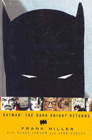
Superman and Batman endured through those years, having generated enough spin-offs – toys, candy, serials, radio, and (for Superman) TV – to retain a pop-cultural foothold. When in the early 1960s Marvel reinvented the juvenile superhero form into something adolescent, DC also flourished, having already floated revamped versions of their 1940s costumed heroes. But it’s unlikely Batman Begins would have begun at all without the Batman TV show. Reviled by most comic-book fans, the mid-1960s Batman series spoofed its source, and played off the Andy Warhol-driven pop art phenomenon in all its colorful POW! ZAP! glory. The surface of the show was a live-action comic book that could be enjoyed straight by children, while teenagers and adults could laugh at the campiness of bringing Batman to literal long-johns life. Yet the Batman series was faithful to its source, adapting stories from the comic book and using most of the major villains. Adam West played Batman in a deadpan manner – only the context went for laughs. Still, anyone who reads comic books doesn’t need to be further made fun of, and the show itself seemed an insult to fans. So the Batman comic books that followed the TV series set about to remove the camp from the feature, writer Denny O’Neil and Neal Adams depicting a frightening gothic Gotham City and a driven hero. But it was Frank Miller’s The Dark Knight Returns (1987) that created the modern, determinedly serious version, which fueled Tim Burton’s Batman (1989) and the film franchise that followed.
Which brings us to Batman: Year One. This reprint of four issues from 1987 will please many readers, and rightly so. The artwork by Mazzucchelli – Milton Caniff school, by way of Alex Toth (Zorro) and Doug Wildey (Jonny Quest) – may be the best Batman ever saw. As for Miller, his characterisation of Batman/Bruce Wayne is intelligent and convincing, and his ability to mount an action scene is second to none. My problems with this latter-day Batman specifically – and the latter-day Batman in general – is a basic wrongheadedness in approach. Batman was created by kids for kids – it’s a juvenile fantasy embraced by adolescents of all ages. Making realistic, ‘adult’ versions of children’s fantasies like Alice in Wonderland and The Wizard of Oz (both of which have mature subtext) is foolish, even silly. The result is Miller making Catwoman a prostitute, and having Commissioner Gordon cheat on his pregnant wife. Miller’s Gotham City is as angst-driven and unpleasant as his own Sin City, a world of perversion and corruption (as imagined by a teenager, anyway). Further, his Spillane-influenced purple prose steps on his artist, intruding with overwrought introspection (Miller gets out of his own way, however, in The Dark Knight Returns).
None of this prevents Batman: Year One from being an interesting, entertaining update, particularly if read quickly – and not taken as seriously as Miller himself does. As for The Batman Chronicles, I can only hope the childish, formative art and clumsy stories don’t alienate new readers, and prevent later volumes from appearing to reprint the work of the best of Kane’s ghosts, Dick Sprang, whose clean, glossy artwork of the 1950s brought the class of a syndicated strip to the bastard Bat-child.
Max Allan Collins, an MWA Edgar nominee in both fiction and non-fiction categories, has earned 13 PWA Shamus nominations for his historical thrillers, winning for his Nathan Heller novels, True Detective (1983) and Stolen Away (1991). His graphic novel Road to Perdition is the basis of the Academy Award-winning film starring Tom Hanks; a prose sequel, Road to Purgatory, was published by Morrow in 2004. His many comics credits include Dick Tracy, Ms Tree, Batman and CSI: Crime Scene Investigation, based on the hit TV series for which he has also written video games, jigsaw puzzles, and an internationally-bestselling series of novels. An independent filmmaker in his native Iowa, his latest indie feature, Shades of Noir (2004), is an anthology of short films.