When the elephant in the room is… an elephant
My new Irish-Indian cosy crime mystery, Death at the Elephant House, is not just inspired by its vivid, pulsating and historic Chandni Chowk setting, but by a painting I watched being created by the author and artist Abhishek Singh under a giant banyan tree in Delhi.
From the first stroke of grey on a blank canvas, to the final touches depicting a mystical elephant with lotus flowers growing from her back swimming through a cosmic soup, watching Abhishek’s brush move was a spiritual experience. As he worked, he told me about his experiences caring for elephants, how they can hear a rain drop drumming inside a cloud, and how cruelly forcing them to carry tourists on hard surfaces gives them abscesses in the soft pads of their feet. I learned a lot over the few days the painting took – including that he paints a lot quicker than I write.
And it reminded me of the Indian elephants of my Belfast childhood – Sheila and Tina. Tina became notorious for stealing and eating coats, cameras and school bags – proving the best ever excuse for being late with your homework. She could pick locks too. (Can Vaseem Khan’s Baby Ganesh do that?)
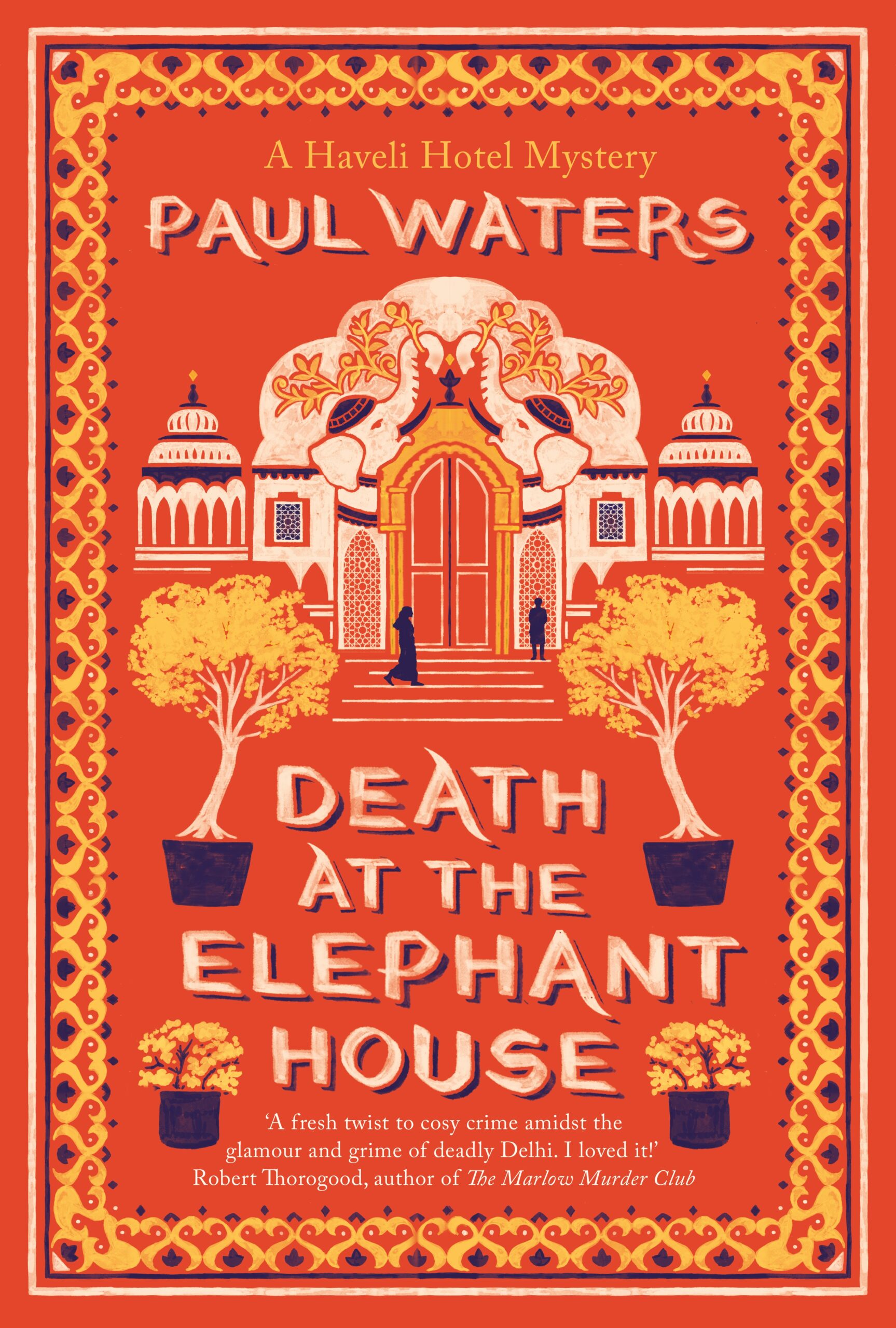
The scene of my crime in the second book in my Delhi Haveli Hotel series is a locked room inside an old mansion in the heart of the city, split down the middle by the warring factions of the family that live there. It derives its nickname, the Elephant House, from the fierce elephant house projecting from the façade, its links to imperial Mughal elephant troop of eras gone by, and from the one resident who is permitted to step on both sides of the divided courtyard – a cigarette-stealing elephant called Roshni.
If that sounds far-fetched, then the real-life Northern Irish woman who sheltered an Indian elephant in her back garden during the Blitz might seem impossibly exotic to you. And the loyalist paramilitary and bare knuckle fighter who kept lions at his small, terraced home in Belfast even harder to believe. Maybe Ireland and India are not so different after all?
My two main protagonists, semi-retired Irish nun Sister Agatha Murphy and Indian hotelier Avtar Mehta, are an eye-catchingly unusual pair of amateur detectives – having to outwit the police and catch killers without losing their sense of humour. Avtar risks death and prison if they fail, but Sister Agatha has the added threat of being deported back to an Ireland that has changed so much since she left. Above all, she must not bring shame on the Convent of the Sister of the Amazing Grace, aka the Saggies. But she’s a nun with impulses and some bad habits, so all bets are off.
Sister Agatha and Avtar are strong characters, as are the police, killers, gangsters and spies they encounter. And they need to be, to avoid being upstaged by Roshni the elephant.
After all, as Chekhov said of a loaded rifle, you shouldn’t put it on stage if it isn’t going to go off. It’s the same with an elephant. My elephant does go off on one. And when she does, it’s delightful chaos.
(Death at the Elephant House is published on October 8th 2026 by the No Exit Press imprint of Bedford Square Publishers in the UK, by Hachette India in India, and by WF Howes in audiobook.)